
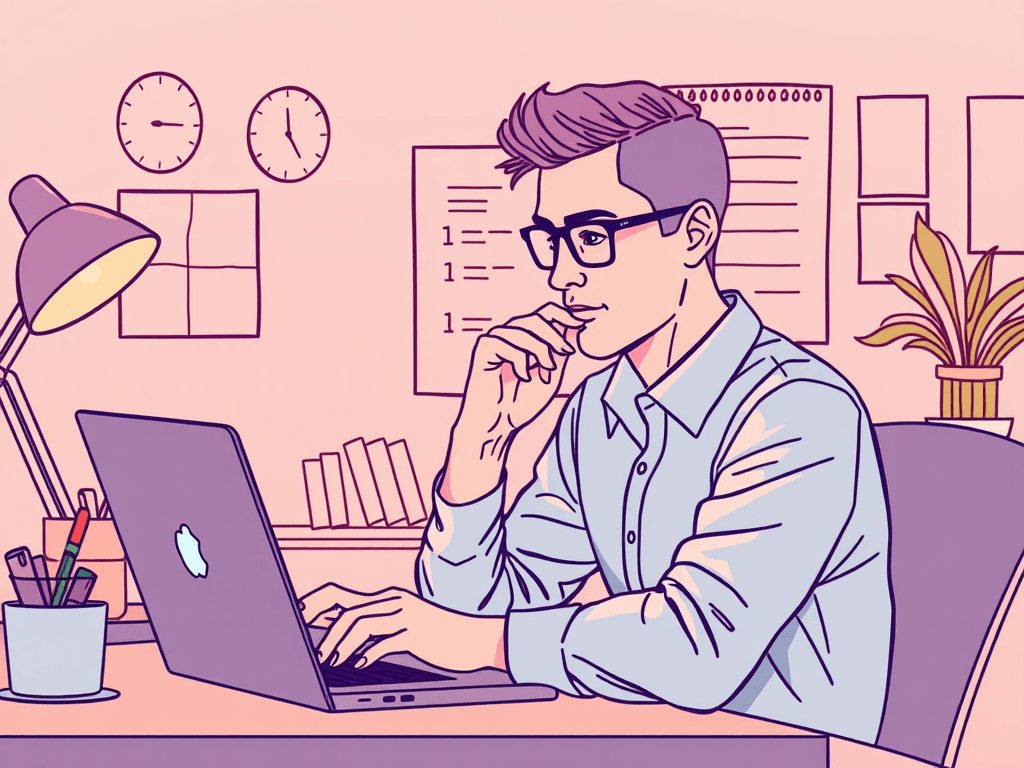
One day I realized I had joined fifth meeting without any break in between. I felt stunned, like a deer caught in headlights. I know that I needed to do something about it but definitely could not find the energy to do it. Then I started questioning why I did not plan my day, why I did not take the small breaks which I used to do earlier. This got me thinking: how many of you are caught in this same cycle?
It is inevitable that during some weeks we have intense schedules due to project deadlines, important customer meetings, starting new projects etc. Maybe you’re a student and need to prepare for your exams, or you are dealing with many problems in your life. You feel exhausted.
What we often forget when we’re overwhelmed is to take a short break. Especially during such weeks, we need to get prepared to take care of our mental health. The technique that saved me was breathing.
Why focus on breathing?
Based on the research [1], breathing practices can help reduce stress and anxiety by activating the body’s relaxation response through voluntary regulation of respiratory patterns, which influences the nervous system to promote a calmer physiological and psychological state. Additional studies demonstrate that deep breathing exercise is a promising intervention for reducing blood pressure in adults with hypertension, which is particularly important given that hypertension is a major contributor to cardiovascular disease [2].
Here are two simple techniques that transformed my overwhelming days:
- Box Breathing
- Relaxing Breath
Don’t wait for the next overwhelming moment—practice these today.
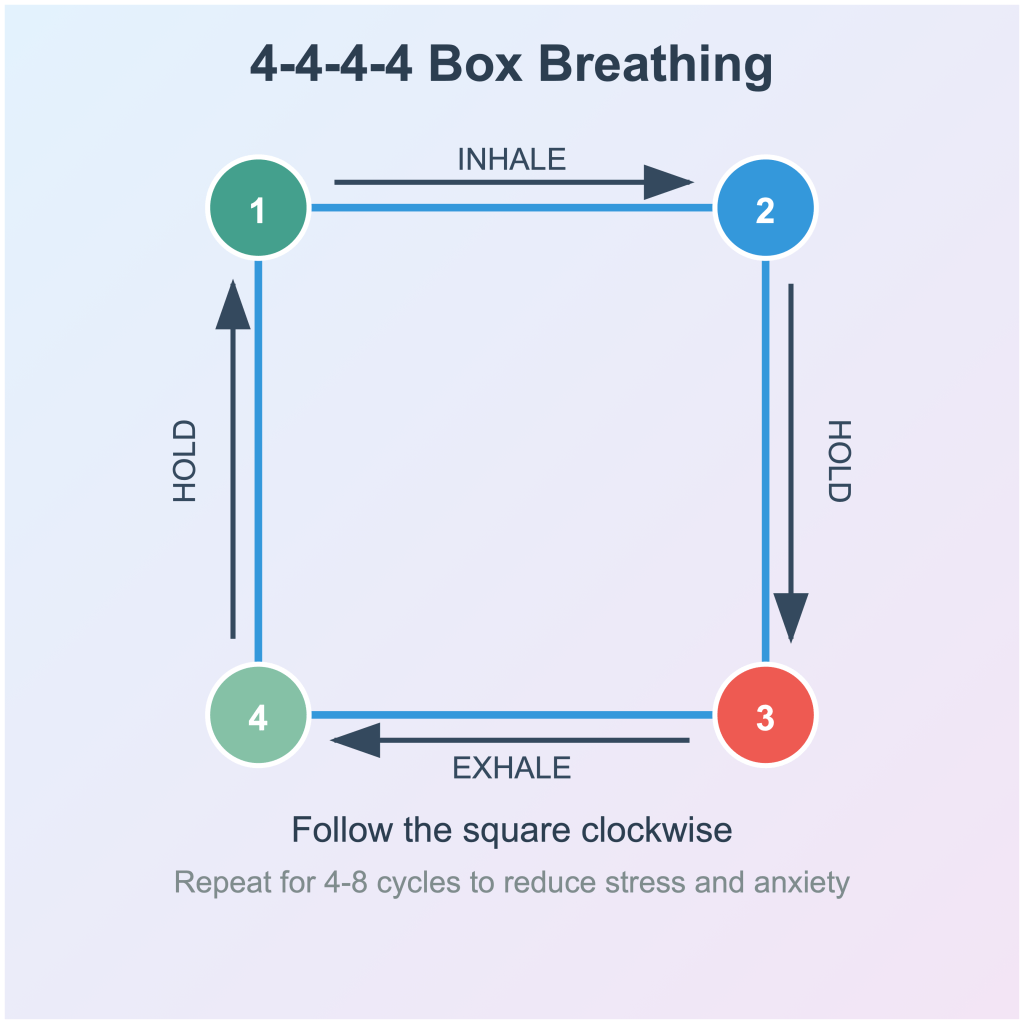
Box Breathing
Box breathing, also known as square breathing or 4-4-4-4 breathing, helps regulate your nervous system, reduce anxiety, and improve focus by creating equal intervals of breathing and breath retention.
How It Works
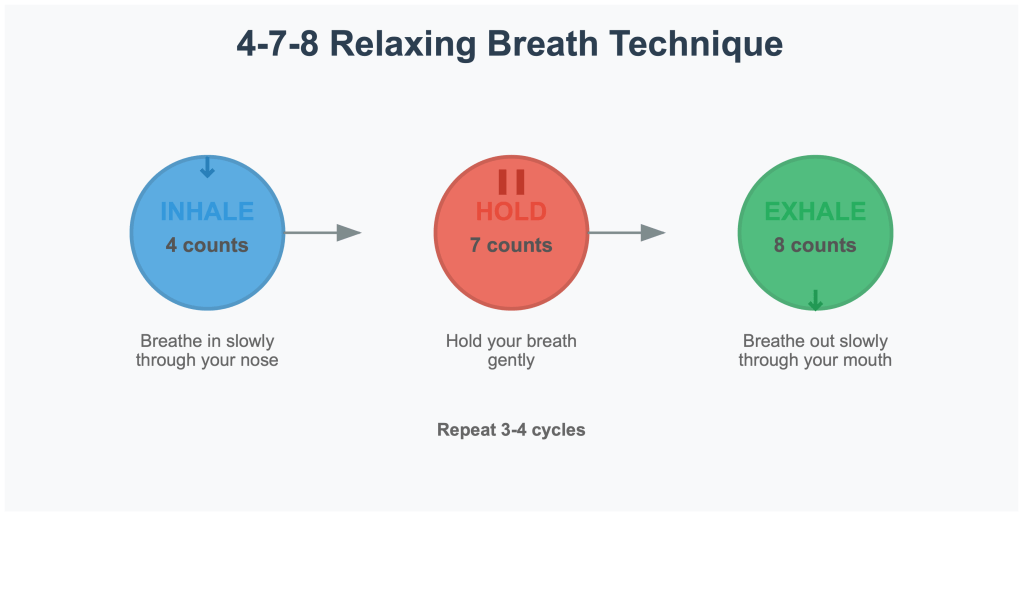
Relaxing Breath
The relaxing breath, also known as 4-7-8 breathing technique acts as a natural tranquilizer for the nervous system, helping you fall asleep faster and reduce anxiety in just a few minutes.
How It Works
References
[1] Bentley, T. G. K., D’Andrea-Penna, G., Rakic, M., Arce, N., LaFaille, M., Berman, R., Cooley, K., & Sprimont, P. (2023). Breathing Practices for Stress and Anxiety Reduction: Conceptual Framework of Implementation Guidelines Based on a Systematic Review of the Published Literature. Brain sciences, 13(12), 1612. https://doi.org/10.3390/brainsci13121612
[2] Tavoian, D., & Craighead, D. H. (2023). Deep breathing exercise at work: Potential applications and impact. Frontiers in physiology, 14, 1040091. https://doi.org/10.3389/fphys.2023.1040091





 Thinking Hub
Leave a comment